This article is contributed by Dr. Craig Galbraith, Distinguished Professor of Management, and Dr. Alex Vestal, Associate Professor of Management within the Cameron School of Business.
Research consistently shows that good community planning, effective zoning and strong development standards always leads to higher regional economic growth. Entrepreneurial interests are shaped not only by financial factors but also by the attractiveness of the community. Landmark research by Cameron School of Business professors, Drs. Craig Galbraith and Alex Vestal, entitled “A Place-Based View on the Relationship Between Local Community Commercial Attractiveness and Entrepreneurial Interest,” is the first study that examines this relationship through an unusual lens: the visual appeal of a community’s “built” environment. This research finds that aesthetic and infrastructural conditions such as signage, congestion, and maintenance substantially affect entrepreneurs’ interest in starting new ventures.
For many years, economic geography emphasized hard factors such as proximity to universities, access to suppliers, and regional clusters of firms. These conditions, often called agglomeration economies, were considered the foundation of entrepreneurial concentration. Yet recent research has shifted attention to soft or lifestyle-related factors that include urban amenities, cultural character, and visual appeal. Scholars argue that in a mobile and service-oriented economy, entrepreneurs increasingly choose where to live and work according to quality-of-life factors rather than costs or proximity to desired locations.
This study builds on that perspective by examining how entrepreneurs perceive community attractiveness, not through entertainment or culture, but through the everyday features of the built environment (i.e., the human-made surroundings of a community, including its buildings, roads, signage, lighting, and landscaping, which shape how people experience a place). This study explores how the appearance of a community influences an entrepreneur’s interest in locating there.
To address this question, the researchers used a three-stage methodology combining participant-driven photo elicitation, thematic analysis, and statistics. The approach moves beyond traditional surveys to capture entrepreneurs’ real-time perceptions of their surroundings. Over one hundred entrepreneurs were asked to visit three commercial locations in the region. Acting as first-time visitors, they photographed each location and rated its visual appeal, sense of safety, and overall impression. They then wrote descriptions of their reasoning while reviewing their photographs, providing detailed commentary on the design, cleanliness, and atmosphere of each site.
The process generated data on 306 commercial sites across the Carolinas. These varied settings reflected a common question for local governments and planners: what makes a commercial area inviting to prospective entrepreneurs. The researchers conducted a careful thematic analysis of the participants’ written reflections and identified twenty-one recurring themes related to a community’s built-environment (e.g., aspects of signage, lighting, congestion, building upkeep, landscaping, and overhead utilities).
Next, these twenty-one potential predictors to were consolidated into just five key themes related to entrepreneurial interest and included (1) the presence of digital or electronic signage, (2) the degree of sign clutter, (3) the level of automobile congestion, (4) the cleanliness and condition of building exteriors, and (5) the visibility of overhead utility lines.
Practical Implications for Cape Fear Communities:
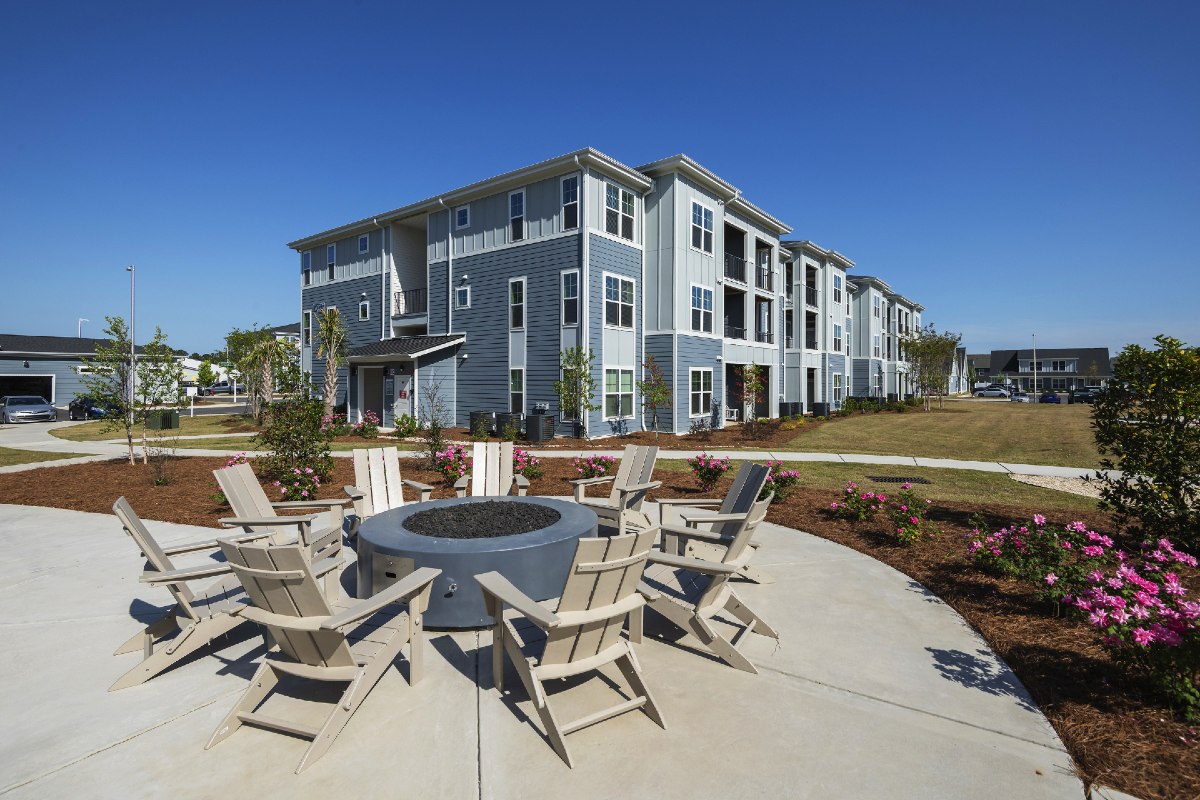
The results demonstrate that entrepreneurs favor commercial areas that appear orderly, well-maintained, and uncluttered (e.g., a clean community design, no digital signs or billboards, attractive landscaping, no graffiti, and effective traffic control). The stronger sense of professionalism and safety inspired by such city designs attract significantly more entrepreneurial interest, and carry important implications for economic development policy.
1. Unlike geographic or climatic factors, the characteristics of the built environment are largely within the control of local governments. Zoning boards, planning commissions, and city councils can directly influence these conditions through design standards, sign ordinances, and infrastructure investment.
2. Communities often rely on tax incentives or grants to attract entrepreneurs, but such policies are expensive and temporary. Improvements in the built environment, such as burying power lines, limiting sign clutter, enhancing streetscapes, and maintaining building facades, may be both more cost-effective and more sustainable over time.
3. Many entrepreneurs experience a community first as visitors heavily influence their impressions of the community’s entrepreneurial viability. The aesthetics of a city’s entry corridors, the effective control of its signage, and the care of its public spaces create the first impression that influences whether someone envisions establishing a business there.
The Bottom Line:
The research contributes to a growing understanding that place matters not only as geography but also as an emotional and aesthetic experience.
1. Entrepreneurs form attachments to places that appear vibrant, safe, and aligned with their aspirations. In this way, the study connects urban planning, behavioral science, and entrepreneurship, suggesting that the perception of opportunity is partly psychological.
2. A community that communicates order, stability, and care through its physical design also signals that it is conducive to economic success.
3. Economic development depends on more than financial factors.
4. Visual improvements and maintenance projects are investments in the entrepreneurial vitality of a community. Regulations that promote aesthetic coherence can have measurable effects on local business formation.
By linking the physical environment to entrepreneurial behavior, these authors illuminate an underappreciated but actionable strategy for local governments seeking long-term growth.

The Takeaway: Disc-o Fever
Staff Reports
-
Oct 2, 2026
|
|
Investors Buy Leland Apartments In Nearly $58M Deal
Staff Reports
-
Oct 2, 2026
|
|
Big Projects Having Or Set To Have Major Local Impacts
Emma Dill
-
Oct 2, 2026
|
|
Comfort Food In Burgaw
Beth A. Klahre
-
Oct 2, 2026
|
|
Trends To Watch: Economic Development
Emma Dill
-
Oct 2, 2026
|
|

The 2026 WilmingtonBiz: Book on Business is an annual publication showcasing the Wilmington region as a center of business.